Friday, May 08, 2020
My Dirty Little Bread Secret
I’m quietly baking bread over here. Sourdough, of course.
I am quite proud that I only posted one picture of it that expired after 24 hours, leaving no trace. I only took the photo to draw attention to my problem: how can I make it more sour? My cousin in Seattle and college roommate in Los Angeles and the head of my rival house at Hogwarts obliged. Now my bread is more sour.
But why am I, a person who shares extensively without reservation, hiding my new hobby?
I am prone to dietary trends, easily convinced of the best new thing and I don’t like to admit it. I blend MCT oil into my morning coffee and I’m not entirely sure why. I sprinkle nutritional yeast into everything from popcorn to stew without really knowing what vitamin B does for me. Back in the day I ate oat bran muffins for my heart and non-fat yogurt for my waist and drank gallons of Dr. Pepper because it was fat-free and the sugar and prune juice was so much better than aspartame, which was in my gelatinous yogurt. Most recently, I brewed my own kombucha (and may start again) and I used to make very creamy almond milk.
I would rather you didn’t know all of this.
I prefer the narrative that I am an independently-minded individual, a stalwart eater, a cook who mainly eats like my foremothers, a knower-of-what-is-good instead of a trier-of-what-is-marketed-to-me.
But, I am loving making bread. For a while I wasn’t sure what it was all about, but I am learning something. Bread making is about developing a little habit, a practice. It isn’t the big investment and then the splash of a birthday cake that never gets eaten all the way. It isn’t the family performance of spending a harried day, moments before Christmas, making lefsa with a special ricer and a special rolling pin to be cooked on a special grill.
It isn’t like dirty floors or my book or the laundry. These three beg for my attention and yet can be ignored for weeks. They tolerate my neglect and need me to give a whole afternoon to them.
Sourdough requires me to circle back often and yet it is easily satisfied. It’s a little glass dish festering on my counter. It is witchcraft: one day I added 2 parts flour and 1 part water and a day later I let go of half of it and added some more of the stuff I put in before. I kept doing this simple thing over and over until it was no longer a bland mush, but a tangy thing that expands to twice its size overnight. Three minutes a day make this magic.
Many things I do require coordination: Ramona, are you done with the dryer? Can you take your clothes upstairs then? Who’s sweatshirt is this? Are all of your dirty underwear in the hamper? You do have clean pants, you just haven’t put them away. The laundry is a streamlined process compared to the orchestration that is teaching.
The sourdough is all mine. No one else is involved, yet it requires the wisdom of ancestors. It rises in the bowl my Grandma Marie used to rise her dough. I pour over online instructions, looking for answers: what to do with the discard? Do I really need to invest in a spray bottle? Which rye flour should I try? But like most good things in life, the instructions are never enough--each recipe is the same but different. Figuring bread out requires a degree of wisdom and experience, a do-able amount of each. The wisdom of other good things--friendship, family, and writing a memoir--take so much longer. Sourdough isn’t instant gratification, but it doesn’t require the commitment of a marriage. You can’t rush it, but it isn’t needy.
Maybe most importantly, this thing on my counter gives back. It satisfies even when it is too dense or bland. Bread fresh out of the oven is always warm and crusty and butter fixes its every fault.
I want to do things more like I am doing sourdough. My cooking has been leaning this direction for years--I make and eat simple things that don’t wear me out. I want to live this way. Instead of burning hot and then out, I want to do little things that build up to something that satisfies, something that gets better as I draw on the collective wisdom of the world. Something that requires me to read and ask and listen and to do something, a little something each day.

Wednesday, March 18, 2020
It's Okay to Throw Out the Schedule
I don’t really know how to write about just one thing when a whole bunch of things are going on, but I am going to try to do it anyway:
I don’t think teachers or parents or students need to worry about schedules and learning objectives and keeping pace.
This is a stressful time and I give you permission to let it all go. If it’s not working, let it go. I get it. For many people, children and adults, structure liberates. Making a daily learning and activity plan, posting it, and abiding by it is working. So by all means, go for it. Do what works.
In fact, as a teacher, it is my job to guide families in this new endeavour of working together in harmony while being trapped at home against our wishes. And I look forward to engaging curious children and building community. This is important work. I hope to soon “meetup” with my math groups each day. I miss them.
But making sure Opal is a fluent reader (or at least knows 1000 sight words by the end of first grade) and Zola has facility with fractions and decimals? By the end of this lock-in? Not my priority. Spending 2 hours on specific, prescribed academic tasks? If they want...
It isn’t going to be easy on the frontlines--at kitchen counters and on bedroom floors. Learning at home will mean sharing devices and lots of technology troubleshooting. At our house suddenly our phones and ipads are always about to die and all of the chargers are missing. No school start time means my children stay up later and wake up later. And, of course, they need a snack every minute of the day.
But experience has taught me that sometimes how we school our children stops working. So we change schools or homeschool or transfer to a better-fit teacher or drop a class. We advocate. We flex. And so if what your school has on offer is not working, it is okay to take a break and reboot. Call in sick. Take a mental health day. Listen to your children. Follow their lead.
If a kid does a little reading (or is read to or listens to an audiobook) and plays some sort of game and moves a little, that kid is winning. That kid is learning. If you just do one of those things, you’re totally punk and I bet your kid chops their own vegetables and can dress themselves with flare. It is ok to email your dedicated teacher and tell them you will be doing “this, but not that” or “none of it at all” for a bit. They’ll probably get it.
Phil reminds me that we’re kind of far out there as far as this is concerned. We are also very privileged. We’ve never been too worried about coverage or the cannon or days of school missed. Our son went to college without a high school diploma, but nearly enough credits for a minor in philosophy. He’s an art major who would like to be a preschool assistant teacher when he finishes. My daughter graduated a year early and (gasp) didn’t complete a college prep program and yet has been accepted to six great colleges anyway. Guess what? She doesn’t even know her state capitols and she’s still not sure she wants to go to college. And that’s ok.
So, if you need it, I give you permission to let go of the relentless push to get something accomplished. Kids will learn anyway.
I love y’all.
This is a stressful time and I give you permission to let it all go. If it’s not working, let it go. I get it. For many people, children and adults, structure liberates. Making a daily learning and activity plan, posting it, and abiding by it is working. So by all means, go for it. Do what works.
In fact, as a teacher, it is my job to guide families in this new endeavour of working together in harmony while being trapped at home against our wishes. And I look forward to engaging curious children and building community. This is important work. I hope to soon “meetup” with my math groups each day. I miss them.
But making sure Opal is a fluent reader (or at least knows 1000 sight words by the end of first grade) and Zola has facility with fractions and decimals? By the end of this lock-in? Not my priority. Spending 2 hours on specific, prescribed academic tasks? If they want...
It isn’t going to be easy on the frontlines--at kitchen counters and on bedroom floors. Learning at home will mean sharing devices and lots of technology troubleshooting. At our house suddenly our phones and ipads are always about to die and all of the chargers are missing. No school start time means my children stay up later and wake up later. And, of course, they need a snack every minute of the day.
But experience has taught me that sometimes how we school our children stops working. So we change schools or homeschool or transfer to a better-fit teacher or drop a class. We advocate. We flex. And so if what your school has on offer is not working, it is okay to take a break and reboot. Call in sick. Take a mental health day. Listen to your children. Follow their lead.
If a kid does a little reading (or is read to or listens to an audiobook) and plays some sort of game and moves a little, that kid is winning. That kid is learning. If you just do one of those things, you’re totally punk and I bet your kid chops their own vegetables and can dress themselves with flare. It is ok to email your dedicated teacher and tell them you will be doing “this, but not that” or “none of it at all” for a bit. They’ll probably get it.
Phil reminds me that we’re kind of far out there as far as this is concerned. We are also very privileged. We’ve never been too worried about coverage or the cannon or days of school missed. Our son went to college without a high school diploma, but nearly enough credits for a minor in philosophy. He’s an art major who would like to be a preschool assistant teacher when he finishes. My daughter graduated a year early and (gasp) didn’t complete a college prep program and yet has been accepted to six great colleges anyway. Guess what? She doesn’t even know her state capitols and she’s still not sure she wants to go to college. And that’s ok.
So, if you need it, I give you permission to let go of the relentless push to get something accomplished. Kids will learn anyway.
I love y’all.
Saturday, May 11, 2019
What I Really Want for Mother's Day...
 I don’t want to be negative or anything, but for Mother’s Day I want to not celebrate Mother’s Day. Don’t get me wrong, I will open the homemade gifts from school and my husband got a nice gift for his mother. I might even write a kind note to my own mom thanking her for telling me she has no expectations for this “Hallmark holiday.” But if you really want to know what I want on a day that I am told is about celebrating me, please note that living a regular Sunday is enough. In fact it is better than Mother’s Day.
When Zola was four, on Mother’s Day she brought me breakfast in bed--a delicious Clif bar on a polka-dot melamine plate. Philip and Ramona believe that breakfast in bed is good for no one, so they suggested she go with this quick, crumb-free, no-need-to-serve-warm option. At eight, Zola recalls this memory with frustration, “they made me.”
I loved extra minutes in bed and the Clif bar (she knew my favorite flavor) and the coffee that came with it and especially Zola’s persistence in the face of those haters. But I am determined to break the cycle. How did the pre-schooler Zola know that breakfast in bed was a thing? Why didn’t they oblige her and throw a few pancakes or even a frozen waffle or hard-boiled egg with toast on a real plate? Why does it still bother her that it wasn’t a grander affair? Who put us in this impossible scenario anyway?
If every other day I am working hard to live with integrity, mindfully triaging what’s important and what’s not, why should Mother’s Day be about meeting a crazy cultural presumption I don’t believe in? I declare from now on in our family there will be no suffering or conflict over unrealistic expectations imposed by others. On Mother’s Day or any other day.
Of course, I get caught up in the madness. Earlier this week I was so proud, downright satisfied, because I ordered two framed photos of our kids for each of their grandmothers. This was six days before I am usually doomed to failure. On Thursday, when I finally managed to pick up the gifts, I found the photo shop printer made my sweet children and the room they were in yellow. Dull yellow, definitely not a flattering or $25-each tone. Definitely not good enough for the most important holiday in May. So I didn’t buy them. It was back to business as usual, a combination of panic and frustration, as I became ome more and more willing to spend whatever it took not to disappoint.
Sometimes, Mother’s Day also takes me to Martyrville, a place where I begin to believe I suffer more than anyone in my family, my extended family, my block, my neighborhood, and the whole state of Oregon. Because of this, I deserve. I deserve a day alone, a clean garage, lots of chocolate, morning cocktails, and to never cook or clean again. Even after myself. And when all of these things don’t happen, I am disappointed, deflated, and bitter.
I declare from now on I will not distort my own reality. And during the years where martyrdom may be close to my reality, I will not fall prey to the notion that it can be fixed in a day. With a gift. And pampering. Or brunch.
Philip asked me if I wanted to go on a hike to see the wildflowers for Mother’s Day. I told him that all sounded lovely, but I did not want to do it for Mother’s Day. I just want to do it tomorrow, on a regular Sunday in May.
Friday, January 11, 2019
You Know You’re a Salem Girl When...
I moved home to Salem, Oregon the week of my forty-third birthday. I spent my entire adult life thinking of myself as an original kind of female. With my crossbody purse and clunky-yet-comfortable shoes and distaste for umbrellas, I thought I stood out. In New Orleans I only knew a handful of women who considered moisturizer and tinted chapstick to be a sufficient makeup regime.
Here’s how I like to see myself: I am the woman who can be ready to go faster than her husband. With me, what you see is what you get. The bags under my eyes are not hidden under concealer and I’ve never found a white hair I didn’t embrace. I am up for anything and adaptable to most situations. Camping in the rain? Use a tarp and a fly. No time for a shower? That’s what ponytails and (if I can find it) dry shampoo are for. I’m not beholden to today’s expectations or yesterday’s traditions. I am comfortable blazing my own trail.
Moving home has shown me that Salem made me that way I am. I am one of the herd and this herd is a beautiful pack. If you are raising a female in Salem, read on.
The Salem girl is always ready to go, up for anything. This explains her penchant for fleece and the fact she is unconcerned with rumpled hair. She can change her own flat tire and paint her own house. She drinks beer because it tastes better than lower carb alcohol. If you call her at four on a summer afternoon, she’ll join you for a swim at the Little North Fork by five. She knows how to make her own fun, because she has to. Swinging after dark at a city park becomes an adventure with the Salem girl.
There is no guise with the Salem girl. The West is the place for pioneers, folks who choose the open space over cities established for a couple centuries. And Salem is the place for the pioneers who didn’t get caught up in the cool of California or more expensive and trendy cities in the #pnw with an excess of cool coffee shops. The Salem girl’s lack of eyeliner shows she’s not afraid of herself. She doesn't need to dress up reality or fit in. She also needs to be able to rub her itchy eyes—there’s a lot of pollen in the air. In other places I lived, women must play a part. Disguising yourself is routine. No need here.
When I was growing up, I was one of the least outdoorsy girls from one of the least outdoorsy families I knew. For the twenty-five years I lived elsewhere, the fact I owned and could pitch a tent and knew how to dribble and shoot a basketball (I didn’t even make the JV team) made me a specimen of capability, an homage to how competent a woman can be. I once got a data entry job in Manhattan because they were most impressed that my resume listed forklift driver as a previous job. This facility with the outdoors and large machinery is part of growing up here. It develops women who aren’t afraid to get wet or dirty or use a drill. We’ve fallen while skiing and on a damp hike and that time we tried a rock climbing wall and we know how to bounce back up. We don’t mind the mud, because it washes off.
Finally, female Salem-anders are not as burdened by an attachment to old things, traditional attitudes towards gender roles, as other American women. When the Missouri farmers showed up in Oregon, they had to get stuff done. Husbands and wives and sons and daughters worked together because they had to cut down the forest, steal the land from the native people, sow some seeds, and raise some cattle for cheddar cheese dairy cooperatives. This terrain did not allow the Salem woman of one hundred years ago to sit back and let someone else lead. Women in Oregon earned the right to vote in 1912, eight years ahead of Nineteenth Amendment. We don’t wait for things to get done; we do them.
When I moved to New York City, it gave me permission to embrace my aggressive instincts. When I was in graduate school in Boston, I welcomed the chance to examine and over intellectualize everything. My life in New Orleans allowed me to cultivate my creative and wild side. Being home has allowed me to be me, a proud Salem girl who now gets to nurture three more little ladies into Salem women.
Sunday, December 16, 2018
Tuesday, October 16, 2018

Wednesday, September 05, 2018
Grief and Comfort
Blessed are they that mourn: for they shall be comforted.
“Everything in the...world tries to keep us from the essential comfort of mourning. Even comfort has been diluted to mean coziness, rather than comfort, with strength.”
from The Irrational Season by Madeleine L’Engle
The older I get and the more my children grow and change, the less I know about parenting them. I do know this: the constant transitions and transformations and losses of parenthood lead me to mourn, to grieve.
I was engaged in grief this summer. At the end of June, Zola wobbled on her bike, corrected herself, wobbled again and fell, breaking her fall with her four front teeth. It turns out a helmet doesn’t provide 100% protection from head injury. When it happened, I was sitting on a deck 70 miles away, sipping rosé with my high school friends before we headed out to an Indigo Girls’ nostalgia concert.
Zola lost two permanent teeth and two baby teeth and suffered a concussion, her second in two months. She remembers “waking up” on the kitchen counter as Philip examined her torn-up mouth. She was never unconscious. In fact, as Philip scooped her into his arms and ran up the hill to our house, she repeated over and over, “What happened? Daddy, what happened?” These minutes have been erased from her memory.
That night, Zola slept between us. Her face was sad and swollen. The next day she seemed a little more herself. We retold the stories of the rescue at the park. Opal’s refrain was, “Sumner came and got me and the bikes and he cried a little bit. There was a ball of blood on Zola’s mouth.” We retold the story of the emergency room: the last tooth falling out, the brain scan that confirmed she was not in mortal danger, the transfer to the oral surgeon’s office, the failed attempt to save one adult tooth. Philip went back to the park that evening and found the other adult tooth laying in the grass.
As the week went on, we reviewed our thoughts from the midst of the trauma: Will she be ok? Could this have been prevented? We catalogued our feelings--shock, panic, sadness, anger. Those emotions turned into pits in our stomachs, tightness in our chests, and headaches as we re-lived them. We voiced the the distortions we had entertained: “It is my fault. She’ll never be ‘normal’ if she has fake teeth. We are cursed.”
We answered for ourselves, over and over again, Zola’s question: What happened? And we began to build the narrative our family will carry with us about this event. This is how I grieve. I like to think of the stages of grief as waves of mourning.
With each wave, I tried to work out the new narrative of our summer and release my expectations of how our life would have developed without this event, this interruption. Knowing and repeating the story takes some of the sting out of trauma. It lessens the feelings rooting themselves in my body.
---------------------------------------------------------------------------------------------
My adult life has often felt like a series of events I must grieve. I have expectations and life diverges. More often than not, change brings grief and celebration, which confuses me. At twenty-four I chose to get married and have a baby, earlier than I planned. I was in love and motherhood suited me. I loved my teaching job. All of these were reasons to celebrate.
Still, I needed to mourn the single, childless twenties I anticipated. Grief felt like a betrayal of my good life. So, I kept really busy and smiled a lot and laughed loudly, but a part of me stayed sad, until the grief interfered, crippling me with feelings in my body, headaches and fatigue. So I dealt with it all the ways I knew--therapy, talking to the friends, gaining some weight, exercising to cope, journaling and praying--until I understood and accepted with joy and tears what was. What is.
There have been other griefs. They pile up. Never getting my second glass of rosé and missing the concert. Time lost to medical training and charter school teaching. A miscarriage. Dyslexia that shakes your child’s confidence. Relationships I wished were different and do not change. The ways my children are like me and not like me--I have to grieve both. Watching my children grow and reluctantly dump me. First they gave up the breast, then they went to school, and next thing I knew, a big part of our relationship is airport farewells and hellos.
My children’s health requires surgeries and therapies and medical interventions. While it is predictable and manageable, each appointment causes me to feel a small loss of perfect health.
When we lived in Boston, a social worker visited the house quarterly to help me arrange Ramona’s many medical appointments. The surgeries and appointments and physical therapy exercises and hearing tests and calls to the optician were limiting, an interruption, a burden, an unwelcome visitor. Again, headaches plagued me.
The social worker gently reminded me, “But this is your life. This will always be a part of your life. Make room for it.”
And so I made appointments part of life, left space in the calendar. I ended each appointment with a cookie for Sumner and Ramona and me in the lobby of Children’s Hospital. After our cookie, we stopped rushing back to school or onto gymnastics. We went home and rested.
---------------------------------------------------------------------------------------------
After the concussion, Zola was not herself. She laughed and cried easily, unable to monitor her emotions. Her attention span was short and she found it hard to focus, even on audiobooks or board games or art projects. Television was off limits, as the intense cognitive activity slows healing. For about ten days, she needed someone close to her, within several feet.
In a crisis, the first wave is for me is coping, summoning superhuman energy to just deal. I have to deny what is happening to be present.
Then there are moments when I need relief--a glass of wine, a meal out, venting to a friend, or binge-watching trash TV. I need more denial to escape. Then, I turn back to begin properly grieving. I make room to get angry and bargain.
I’m still doing that. So are the girls. Recently, out of the blue, Zola turned to Opal and said, “Was my nose bleeding? Was there blood coming out of my nose?”
“No, it was up to your nose, under your nose, but not coming out of your nose.”
The process of grieving continues: understanding what happened, accepting it, letting go of the summer we hoped for, and dwelling in the place we are, with gratitude. This wave of mourning exhausts me. Some call it depression.
My friend says she’s been tired since she turned 42. It was 40 for me. I don’t think it’s age, it’s the grief piling up.
On the Mayo Clinic’s website I read there are many causes for fatigue. When I studied the list, I wondered if I had cancer or diabetes or irritable bowel disease or anemia, all listed conveniently linked to other pages with information on these problems. Grief is also on the list, but they don’t provide a link detailing symptoms, causes, diagnosis, and treatment.
That’s ok. I know the waves of my grief. And I know that my body is tired, exhausted, even fatigued, because it wants me to slow down and deal. There is no way to caffeinate grief away. It is a wave in the process. I have to break out all my tools and tricks: journaling, exercise, maybe more talk therapy, extra cups of tea, prayer and friendship, time alone with Philip, more journaling, perhaps a blog or essay, and lots of good nights of sleep.
---------------------------------------------------------------------------------------------
Since Trump was elected, I’ve heard my fellow discontents go on and on about self-care, which is making room for grief. So often I get self-care wrong. I want to hide in what Madeleine L’Engle calls coziness and pretend it is self-care. But the escape of coziness has its limits; emotion still lingers in my body after a cozy time. I want L’Engle’s comfort that strengthens.
I need to get better at grieving. I am not seeking the happiest or most painless or most restful or busiest life. I want a life where I am engaged with my convictions and people and the communities I love. To do this I need to get used to grieving. Grieving, or mourning, is an active process. And I think Madeleine L’Engle names what I know: the process strengthens.
As Zola began to improve, we discovered that she and Opal and I had lice. As soon as the lice was eradicated, I came down with a stomach virus.
The griefs pile up. My life does not go as anticipated and I have to make room. Practicing this with concussions and lice and the stomach flu is important so I can embrace the bigger griefs.
I must mourn and be comforted so I can begin again, stronger.
I think L’Engle explains it well:
“It’s always pain, this letting go, and yet it leads to joy, and a kind of lightness which is almost physical.”
also from The Irrational Season
“Everything in the...world tries to keep us from the essential comfort of mourning. Even comfort has been diluted to mean coziness, rather than comfort, with strength.”
from The Irrational Season by Madeleine L’Engle
The older I get and the more my children grow and change, the less I know about parenting them. I do know this: the constant transitions and transformations and losses of parenthood lead me to mourn, to grieve.
I was engaged in grief this summer. At the end of June, Zola wobbled on her bike, corrected herself, wobbled again and fell, breaking her fall with her four front teeth. It turns out a helmet doesn’t provide 100% protection from head injury. When it happened, I was sitting on a deck 70 miles away, sipping rosé with my high school friends before we headed out to an Indigo Girls’ nostalgia concert.
Zola lost two permanent teeth and two baby teeth and suffered a concussion, her second in two months. She remembers “waking up” on the kitchen counter as Philip examined her torn-up mouth. She was never unconscious. In fact, as Philip scooped her into his arms and ran up the hill to our house, she repeated over and over, “What happened? Daddy, what happened?” These minutes have been erased from her memory.
That night, Zola slept between us. Her face was sad and swollen. The next day she seemed a little more herself. We retold the stories of the rescue at the park. Opal’s refrain was, “Sumner came and got me and the bikes and he cried a little bit. There was a ball of blood on Zola’s mouth.” We retold the story of the emergency room: the last tooth falling out, the brain scan that confirmed she was not in mortal danger, the transfer to the oral surgeon’s office, the failed attempt to save one adult tooth. Philip went back to the park that evening and found the other adult tooth laying in the grass.
As the week went on, we reviewed our thoughts from the midst of the trauma: Will she be ok? Could this have been prevented? We catalogued our feelings--shock, panic, sadness, anger. Those emotions turned into pits in our stomachs, tightness in our chests, and headaches as we re-lived them. We voiced the the distortions we had entertained: “It is my fault. She’ll never be ‘normal’ if she has fake teeth. We are cursed.”
We answered for ourselves, over and over again, Zola’s question: What happened? And we began to build the narrative our family will carry with us about this event. This is how I grieve. I like to think of the stages of grief as waves of mourning.
With each wave, I tried to work out the new narrative of our summer and release my expectations of how our life would have developed without this event, this interruption. Knowing and repeating the story takes some of the sting out of trauma. It lessens the feelings rooting themselves in my body.
---------------------------------------------------------------------------------------------
My adult life has often felt like a series of events I must grieve. I have expectations and life diverges. More often than not, change brings grief and celebration, which confuses me. At twenty-four I chose to get married and have a baby, earlier than I planned. I was in love and motherhood suited me. I loved my teaching job. All of these were reasons to celebrate.
Still, I needed to mourn the single, childless twenties I anticipated. Grief felt like a betrayal of my good life. So, I kept really busy and smiled a lot and laughed loudly, but a part of me stayed sad, until the grief interfered, crippling me with feelings in my body, headaches and fatigue. So I dealt with it all the ways I knew--therapy, talking to the friends, gaining some weight, exercising to cope, journaling and praying--until I understood and accepted with joy and tears what was. What is.
There have been other griefs. They pile up. Never getting my second glass of rosé and missing the concert. Time lost to medical training and charter school teaching. A miscarriage. Dyslexia that shakes your child’s confidence. Relationships I wished were different and do not change. The ways my children are like me and not like me--I have to grieve both. Watching my children grow and reluctantly dump me. First they gave up the breast, then they went to school, and next thing I knew, a big part of our relationship is airport farewells and hellos.
My children’s health requires surgeries and therapies and medical interventions. While it is predictable and manageable, each appointment causes me to feel a small loss of perfect health.
When we lived in Boston, a social worker visited the house quarterly to help me arrange Ramona’s many medical appointments. The surgeries and appointments and physical therapy exercises and hearing tests and calls to the optician were limiting, an interruption, a burden, an unwelcome visitor. Again, headaches plagued me.
The social worker gently reminded me, “But this is your life. This will always be a part of your life. Make room for it.”
And so I made appointments part of life, left space in the calendar. I ended each appointment with a cookie for Sumner and Ramona and me in the lobby of Children’s Hospital. After our cookie, we stopped rushing back to school or onto gymnastics. We went home and rested.
---------------------------------------------------------------------------------------------
After the concussion, Zola was not herself. She laughed and cried easily, unable to monitor her emotions. Her attention span was short and she found it hard to focus, even on audiobooks or board games or art projects. Television was off limits, as the intense cognitive activity slows healing. For about ten days, she needed someone close to her, within several feet.
In a crisis, the first wave is for me is coping, summoning superhuman energy to just deal. I have to deny what is happening to be present.
Then there are moments when I need relief--a glass of wine, a meal out, venting to a friend, or binge-watching trash TV. I need more denial to escape. Then, I turn back to begin properly grieving. I make room to get angry and bargain.
I’m still doing that. So are the girls. Recently, out of the blue, Zola turned to Opal and said, “Was my nose bleeding? Was there blood coming out of my nose?”
“No, it was up to your nose, under your nose, but not coming out of your nose.”
The process of grieving continues: understanding what happened, accepting it, letting go of the summer we hoped for, and dwelling in the place we are, with gratitude. This wave of mourning exhausts me. Some call it depression.
My friend says she’s been tired since she turned 42. It was 40 for me. I don’t think it’s age, it’s the grief piling up.
On the Mayo Clinic’s website I read there are many causes for fatigue. When I studied the list, I wondered if I had cancer or diabetes or irritable bowel disease or anemia, all listed conveniently linked to other pages with information on these problems. Grief is also on the list, but they don’t provide a link detailing symptoms, causes, diagnosis, and treatment.
That’s ok. I know the waves of my grief. And I know that my body is tired, exhausted, even fatigued, because it wants me to slow down and deal. There is no way to caffeinate grief away. It is a wave in the process. I have to break out all my tools and tricks: journaling, exercise, maybe more talk therapy, extra cups of tea, prayer and friendship, time alone with Philip, more journaling, perhaps a blog or essay, and lots of good nights of sleep.
---------------------------------------------------------------------------------------------
Since Trump was elected, I’ve heard my fellow discontents go on and on about self-care, which is making room for grief. So often I get self-care wrong. I want to hide in what Madeleine L’Engle calls coziness and pretend it is self-care. But the escape of coziness has its limits; emotion still lingers in my body after a cozy time. I want L’Engle’s comfort that strengthens.
I need to get better at grieving. I am not seeking the happiest or most painless or most restful or busiest life. I want a life where I am engaged with my convictions and people and the communities I love. To do this I need to get used to grieving. Grieving, or mourning, is an active process. And I think Madeleine L’Engle names what I know: the process strengthens.
As Zola began to improve, we discovered that she and Opal and I had lice. As soon as the lice was eradicated, I came down with a stomach virus.
The griefs pile up. My life does not go as anticipated and I have to make room. Practicing this with concussions and lice and the stomach flu is important so I can embrace the bigger griefs.
I must mourn and be comforted so I can begin again, stronger.
I think L’Engle explains it well:
“It’s always pain, this letting go, and yet it leads to joy, and a kind of lightness which is almost physical.”
also from The Irrational Season
Tuesday, February 27, 2018
Trusting My Children

It starts with stuffing your kid into a coat they protest wearing and ends with talking them into taking Spanish when they tell you they know the class will be too hard for them due to their dyslexia. Why don’t we listen to our children?
Opal does not like to wear coats. She has at least half a dozen coats and jackets. Later today a half-poncho, half-cape will arrive on my doorstep, my mother’s final attempt to coax her into a warmer layer by purchasing something cute. Maybe it’ll work (although the second then third fleece didn’t work and neither did the wool, pink zipper-sweater with the rainbow hedgehog Opal eagerly chose herself) and maybe it won’t.
As Opal boarded the minivan today, a sweater and fleece balled up in her arms, it was snowing. She wasn’t cold. She was comfortable in her leggings and Uggs and t-shirt. Most places we go, I carry an extra layer and sometimes a hat and a scarf. I do this mainly for other adults. When they see the girl in the sundress at the playground when it is less than 50 degrees, they scan the adults in the area. The small clothes I carry are saying, “She’s with me and, yes, I am paying attention.”
I am trying to say to Opal, “I hear you and you can trust yourself. While you figure out what you are comfortable with, I will be here to support you.” Every once in a while, she asks to put on the coat hanging on my hooked finger.
I’ve always been quite liberal about coats, but in other areas, I have a hard time trusting my kids’ instincts.
When Ramona told me at age four she wanted a small birthday party instead of inviting the class, I protested. The favors were purchased and the invitations addressed. Philip helped me get a hold of myself and we had a box of extra unicorn bubble bottles in the cabinet for years.
When Sumner wanted to read the sixth Harry Potter book in first grade, I wouldn’t let him. I didn’t think he was ready for Dumbledore’s death. Wouldn’t the great wizard’s death be like telling him there was no Santa? He bristled at the restriction and then patiently waited. The following year when we finally read The Half Blood Prince, during the dark chapter before Dumbledore’s death, Sumner casually asked, “Is this the part where he dies?” He knew all along about the things I tried to protect him from.
Still, I made Zola wait until her seventh birthday to read The Goblet of Fire. I am still worried about the darkness. Have I learned nothing?
There are two reasons I distrust my children: I worry about other people’s perceptions of my parenting and I think I know my children better than they know themselves.
Somewhere in the last few years of parenting teenagers, Philip began listening more and saying less. He often repeats to Sumner and Ramona, “You’ll figure it out.” They’ll figure out how to manage their school workload. They’ll figure out what they want out of a romantic relationship. They’ll figure out what they want out of an education. They’ll figure out if and when they want to use drugs and alcohol. They’ll figure out what life is all about. If we dare to trust them, they can trust themselves.
I think “You’ll figure it out” has become his refrain, because Philip needs to remind himself to trust them. It is a little reminder of our children's blossoming autonomy and proven resilience. I, too, have to remind myself of this everyday: Trust my children.*
*Unless we are tired and hungry. Then both children and parents must eat and sleep so we can begin to trust ourselves again.
Tuesday, December 12, 2017
White Evangelicals, This Is For You
Even though I prefer hymns and an organ to Christian karaoke with a guitar, even though I am pro-choice and pro-gay marriage, and even though I lean so far to the left I am pretty much a socialist, for as long as I can remember, I identify as an Evangelical Christian. I’m not about fire and brimstone, but I claim the faith. When I admit this to people, I usually get a crumpled-forehead frown.
Why would I claim a tribe I am at odds with?
I label myself “Evangelical” to indicate that my faith is a personal practice, not a box I check when admitted to the hospital. My label has never made this clear to people who aren’t Evangelical.
While it doesn’t roll off the tongue and no one knows what I mean when I say it, I am also a centered-set Christian. In centered-set Christianity, the focus is on movement toward Jesus. We leave the judgement up to God instead of burdening ourselves with it.
Centered-set Christians believe they can be pointed to God’s truth by anyone. In the Bible (from Rahab to the Magi), all-star Jews (from Joshua and the wandering Hebrews to Mary, Joseph, and Jesus) weren’t fussy about who their God spoke to and through. If God spoke, they listened.
(Centered-set Christians are partly defined in contrast to bounded-set Christians. Bounded-set Christians believe you are in or out, saved or damned, part of the tribe or wandering. Because of this, there is a good deal of focus on the boundary, what it takes to be part of the body of Christ. Sin must be defined and categorized. Rules are enforced.)
In the last twenty-five years, as I moved from New York City to Phoenix to Oakland to London to Boston and finally landed in New Orleans, I attended or was a member at ten churches: one Covenant, two non-denominational, one African Methodist Episcopal, three Episcopalian, one Vineyard, one Vintage, and one Presbyterian Church of America. Some were bounded-set and others were centered-set.
These congregations run the gamut of worship styles, leadership structures, and political leanings. Some of the services ended promptly at the 58-minute mark, others spent 10 minutes passing the peace and 20 minutes on announcements. Most of these churches were small, but a couple had almost a thousand members. Some were racially diverse, some were predominantly white. All served coffee after the service. None were perfect. Or even close.
To be a part at each of these churches I compromised. Non-dairy creamer instead of half and half, PowerPoint instead of liturgical tradition, random sermons on one verse instead of a series of sermons on a book of the Bible, and Christians who are only comfortable with Christians, unsure of how to handle the rest of my family.
Many times, I overlooked denominational policies I openly disagreed with in order to find a home where I can pray with others. I am pained when I see no women in leadership, no affirmation of LBGTQ+, and, most recently, silence on issues relating to the Black Lives Matter movement and immigration policies. Many Sundays, I want to give up on American Evangelical Christianity altogether.
I have seen two centered-set churches that I belonged to prayerfully search and shift their policies—opening their doors to all people not just in name (“we welcome gay folks but they cannot be in leadership unless they are celibate”), but in practice (“we embrace gay marriage and gay families”). I have witnessed predominantly white churches began to stand at the front lines of DACA and BLM movements. In my view, churches leaning into God will be nudged towards God’s vision of reconciliation and action.
Centered-set churches preach “let’s just look to God.” They are trying to say: we don’t care if you wear a red hat or a pantsuit. The body of Christ doesn’t register your voting record, we love you no matter what. This is true. But a fear of offending other Christians can lead to paralysis and missed opportunities to share with our fellow believers the richness of the story of a guy we call a savior, who came to free the oppressed.
I’m not saying, “You in the red hat with the NRA bumper sticker, you’re out. If you don’t love God by toting a witty protest slogan on poster board and march with me in the streets, you’re out.” I will admit I think this and grumble that we are not aligned, but I should probably repent for that. I think centered-set folks shouldn’t be afraid to share our convictions and act on them in the name of God.
Do we want to be peacekeepers (at the cost of the oppressed) or can we boldly be peacemakers (making some noise to fight for God’s justice here one earth)?
I’m looking for a church. As I search, I dig deep into denominational policies so I know what compromises I’ll be making this time around. When I scour what each sect professes at the highest levels, I grow frustrated. Often core positions stand in stark contrast to the warmth I experience as I sit in the pew.
At one point, I clicked on a video created by a white, male leader of an Evangelical denomination. He addressed his congregations, urging white Evangelical Christians to listen to stories of Evangelical people of color, urging them to hear their brothers’ and sisters’ stories of oppression. He wrote a letter emphasizing “all lives matter.” I am going to email this leader and ask him to go further, to speak for those he’s heard and urge action. The guys in the red hats will listen to him.
I want to see his message as progress, hopeful. At least he’s listening. But today, in this climate of rising hate and oppression, it is not enough. White Christians need to go beyond listening and take action. Silence on issues of injustice in the name of “just focusing on Christ” rings as false as the televangelists who preach about giving generously while hoarding funds for their mansions.
Silence isn’t neutral anymore. Silence is part of the problem. Jesus listened to the marginalized and took action. We should too.
Christian communities need to educate themselves and engage in tough issues they don’t understand. We shouldn’t do it so we can tolerate one another on Sunday morning, but so we can stand up against hatred and oppression. I am so grateful for the pagans, Mormons, Jews, atheists, Hindus and others who point me toward God, toward Jesus’s truth. I wish more of the centered-set Evangelicals pointed me there too.
Why would I claim a tribe I am at odds with?
I label myself “Evangelical” to indicate that my faith is a personal practice, not a box I check when admitted to the hospital. My label has never made this clear to people who aren’t Evangelical.
While it doesn’t roll off the tongue and no one knows what I mean when I say it, I am also a centered-set Christian. In centered-set Christianity, the focus is on movement toward Jesus. We leave the judgement up to God instead of burdening ourselves with it.
Centered-set Christians believe they can be pointed to God’s truth by anyone. In the Bible (from Rahab to the Magi), all-star Jews (from Joshua and the wandering Hebrews to Mary, Joseph, and Jesus) weren’t fussy about who their God spoke to and through. If God spoke, they listened.
(Centered-set Christians are partly defined in contrast to bounded-set Christians. Bounded-set Christians believe you are in or out, saved or damned, part of the tribe or wandering. Because of this, there is a good deal of focus on the boundary, what it takes to be part of the body of Christ. Sin must be defined and categorized. Rules are enforced.)
In the last twenty-five years, as I moved from New York City to Phoenix to Oakland to London to Boston and finally landed in New Orleans, I attended or was a member at ten churches: one Covenant, two non-denominational, one African Methodist Episcopal, three Episcopalian, one Vineyard, one Vintage, and one Presbyterian Church of America. Some were bounded-set and others were centered-set.
These congregations run the gamut of worship styles, leadership structures, and political leanings. Some of the services ended promptly at the 58-minute mark, others spent 10 minutes passing the peace and 20 minutes on announcements. Most of these churches were small, but a couple had almost a thousand members. Some were racially diverse, some were predominantly white. All served coffee after the service. None were perfect. Or even close.
To be a part at each of these churches I compromised. Non-dairy creamer instead of half and half, PowerPoint instead of liturgical tradition, random sermons on one verse instead of a series of sermons on a book of the Bible, and Christians who are only comfortable with Christians, unsure of how to handle the rest of my family.
Many times, I overlooked denominational policies I openly disagreed with in order to find a home where I can pray with others. I am pained when I see no women in leadership, no affirmation of LBGTQ+, and, most recently, silence on issues relating to the Black Lives Matter movement and immigration policies. Many Sundays, I want to give up on American Evangelical Christianity altogether.
I have seen two centered-set churches that I belonged to prayerfully search and shift their policies—opening their doors to all people not just in name (“we welcome gay folks but they cannot be in leadership unless they are celibate”), but in practice (“we embrace gay marriage and gay families”). I have witnessed predominantly white churches began to stand at the front lines of DACA and BLM movements. In my view, churches leaning into God will be nudged towards God’s vision of reconciliation and action.
Centered-set churches preach “let’s just look to God.” They are trying to say: we don’t care if you wear a red hat or a pantsuit. The body of Christ doesn’t register your voting record, we love you no matter what. This is true. But a fear of offending other Christians can lead to paralysis and missed opportunities to share with our fellow believers the richness of the story of a guy we call a savior, who came to free the oppressed.
I’m not saying, “You in the red hat with the NRA bumper sticker, you’re out. If you don’t love God by toting a witty protest slogan on poster board and march with me in the streets, you’re out.” I will admit I think this and grumble that we are not aligned, but I should probably repent for that. I think centered-set folks shouldn’t be afraid to share our convictions and act on them in the name of God.
Do we want to be peacekeepers (at the cost of the oppressed) or can we boldly be peacemakers (making some noise to fight for God’s justice here one earth)?
I’m looking for a church. As I search, I dig deep into denominational policies so I know what compromises I’ll be making this time around. When I scour what each sect professes at the highest levels, I grow frustrated. Often core positions stand in stark contrast to the warmth I experience as I sit in the pew.
At one point, I clicked on a video created by a white, male leader of an Evangelical denomination. He addressed his congregations, urging white Evangelical Christians to listen to stories of Evangelical people of color, urging them to hear their brothers’ and sisters’ stories of oppression. He wrote a letter emphasizing “all lives matter.” I am going to email this leader and ask him to go further, to speak for those he’s heard and urge action. The guys in the red hats will listen to him.
I want to see his message as progress, hopeful. At least he’s listening. But today, in this climate of rising hate and oppression, it is not enough. White Christians need to go beyond listening and take action. Silence on issues of injustice in the name of “just focusing on Christ” rings as false as the televangelists who preach about giving generously while hoarding funds for their mansions.
Silence isn’t neutral anymore. Silence is part of the problem. Jesus listened to the marginalized and took action. We should too.
Christian communities need to educate themselves and engage in tough issues they don’t understand. We shouldn’t do it so we can tolerate one another on Sunday morning, but so we can stand up against hatred and oppression. I am so grateful for the pagans, Mormons, Jews, atheists, Hindus and others who point me toward God, toward Jesus’s truth. I wish more of the centered-set Evangelicals pointed me there too.
Tuesday, November 28, 2017
Thanksgiving Triage
Last week I didn’t change my wool socks for three days. My contributions to the big dinner were not my best: the stuffing was too bland, the apple galette needed more sugar, and I bought the sweet potato casserole. Tuesday night I couldn’t fall asleep until 1:00AM because I was worried about Nurse Jackie’s web of lies in season three and Zola’s separation anxiety and how to spend Phil’s day off. I ate out too much, I didn’t exercise enough, and I spent too much time scrolling through Facebook.
Our culture shouts the anthem: keep it simple, which means make things look sleek and minimal, while scurrying around frantically to hide your mess.
I have a different anthem: triage it. Do what you have to do—deal with the acute asthma attack and the guy losing blood and know you’ll eventually get to the kid who busted his lip and the possible broken wrist. Look back at what you actually did, not what you have left to do. Life will never be as simple as a centerpiece of white candles on crystal candle sticks. We all have a laundry basket of stray toys hidden somewhere. Life is complex, a tangle of what we want accomplish and what we have to do.
Last week I actually did some things. I read half of Big Little Man, I spent a day at the coast with my mom and Ramona and her friend, I found second-hand snow gear for the Littles, and I took the van to be vacuumed. I spent an afternoon and evening relaxing with family. I walked my dogs everyday, even in the rain. I made a bone broth with the turkey carcass.
My mom tells me that my Grandpa Art used to start the day with this prayer, “Dear Lord, these are my priorities, please show me yours.”
My mornings usually start with two girls climbing in bed to rouse me, one chattering in my ear because it's perhaps the only time she’ll have my attention and the other tugging on my arm to rub the mole on the inside of my elbow, dislocating my shoulder. As I stagger to pour their cereal and make my coffee, I hope that I might be able to glance at some headlines on my phone before it is time to make lunches. Usually, I forget to set the simple intention my grandfather apparently muttered each morning.
Next thing I know, I am hostage, trapped in my day, a pinball bouncing from one emergency to the next. I have to stop myself and triage: run through the list that has brought me to the boiling point and turn down the heat. The Thanksgiving blog post can be published the week after, I can say no to my children so that we don’t spin off-kilter, and no one notices my socks. Walking, even in the rain, is essential to get oxygen to my brain. Taking time to write in the midst of a major move is valuable, and whatever I think I need to buy today, can also be bought tomorrow.
So, I triage it.
Our culture shouts the anthem: keep it simple, which means make things look sleek and minimal, while scurrying around frantically to hide your mess.
I have a different anthem: triage it. Do what you have to do—deal with the acute asthma attack and the guy losing blood and know you’ll eventually get to the kid who busted his lip and the possible broken wrist. Look back at what you actually did, not what you have left to do. Life will never be as simple as a centerpiece of white candles on crystal candle sticks. We all have a laundry basket of stray toys hidden somewhere. Life is complex, a tangle of what we want accomplish and what we have to do.
Last week I actually did some things. I read half of Big Little Man, I spent a day at the coast with my mom and Ramona and her friend, I found second-hand snow gear for the Littles, and I took the van to be vacuumed. I spent an afternoon and evening relaxing with family. I walked my dogs everyday, even in the rain. I made a bone broth with the turkey carcass.
My mom tells me that my Grandpa Art used to start the day with this prayer, “Dear Lord, these are my priorities, please show me yours.”
My mornings usually start with two girls climbing in bed to rouse me, one chattering in my ear because it's perhaps the only time she’ll have my attention and the other tugging on my arm to rub the mole on the inside of my elbow, dislocating my shoulder. As I stagger to pour their cereal and make my coffee, I hope that I might be able to glance at some headlines on my phone before it is time to make lunches. Usually, I forget to set the simple intention my grandfather apparently muttered each morning.
Next thing I know, I am hostage, trapped in my day, a pinball bouncing from one emergency to the next. I have to stop myself and triage: run through the list that has brought me to the boiling point and turn down the heat. The Thanksgiving blog post can be published the week after, I can say no to my children so that we don’t spin off-kilter, and no one notices my socks. Walking, even in the rain, is essential to get oxygen to my brain. Taking time to write in the midst of a major move is valuable, and whatever I think I need to buy today, can also be bought tomorrow.
So, I triage it.
Thursday, November 16, 2017
My Scolding Love Letter to Salem

“The people in Salem are so nice. It freaks me out.” -A Transplant
“At least Salem is close to lots of cool things.”
-Native Salemite
“What is it like to be back? Salem is better. Right?” -Old High School Friend
Salem, please stop apologizing. Shut down your self-deprecating comments. Calm you insecurities.
You are smart enough, you are good enough, and gosh darn it, I like you.
Salem is a fabulous place to live.
The landscape surprises me everyday. It is a natural beauty who needs no make-up. While the tourists are directed to our wineries and historic sites, it is the air that catches my attention. It is crisp and fresh, earthy and leafy. There are big open spaces dotting the city: parks and farms and hills too steep to build on. They beg me to climb out of my minivan and slip on my rubber boots to tromp around, discovering the trees while my dogs run freely while I help the girls add thistles and pine cones and chestnuts to their collection. There are trees, all sorts, lining the streets and covering the hills. And what about the ingenious play structures around every turn? They kind of remind me of Paris.
Every weekend, Philip takes long bike rides. He marvels that it is so quick to get to the outskirts of Salem, and be on the country roads, pedaling by sheep and goats and Christmas tree farms and fields cleared for the winter. It reminds him of his time in Oxford, England, a city of about the same size.
The ease of living in Salem cannot be understated and there is no need to be coy about it. It is practical—affordable and manageable, but not a suburb on the end of a freeway originating in the center of a metropolis. Salem is a community that stands on its own.
Don’t be like Oakland and Baltimore, cowering in the shadow of their nearby, cool sibling cities. Envy does not become you. This isn’t a race to be the best, just settle into being you.
My father has always explained to me that Salem has a larger than average middle class—state workers and teachers and regular folk. Salem isn’t a rich, bratty snob looking for the best avocado toast in town. One of Ramona’s surprises? The amount of fundraisers the student organizations at South High do. They work for their privilege to participate.
While all of the places I’ve lived since leaving Salem are becoming less diverse, both racially and socio-economically, because of policies encouraging gentrification, Salem is becoming more diverse every year. This trend is likely to continue. (Let’s make sure to make city policies that continue to support this diversity.)
Finally, Salem, embrace your grime and call it grit. Appreciate your home-grown habits and call it culture. The woman I saw at Costco who still does her bangs with a curling iron and mousse followed by Aquanet? She’s an emblem, not an embarrassment. Stop by Happy Curry and get a dozen samosas. Thrift at your safe and steady Value Village or Goodwill by the pound on Portland Road or the higher-end Assistance League Shop and know you’re getting a deal and recycling too. Be impressed that Magoos is still open, instead of looking away as you drive by.
I must add a caveat to this tirade: I had the unlikely and strange experience of a happy childhood. And that childhood was in Salem. And so, maybe I like Salem more than other folks I grew up with here. I understand needing to get away and see the world or needing to escape the painful ruts of childhood. Place and experience weave together.
I modeled myself off of Jo March and Anne Shirley. Corny, but true. While I don’t think of them often anymore, my life mirrors theirs. Both become teachers and writers. They both fall in love with the local boy and leave him to explore far off places and find adventures. Jo, married the odd Professor Bhaer, the German tutor. I married the odd grandchild of Germans, even if he was disguised as a Southerner in white jeans when I met him. Anne and Jo return home, even though it is the last place they expect to settle. I read it as a resigned and disappointed settling for them. As far as I can remember, neither hated on Avonlea or never-named Concord. They return home, partially because of where they’d been and what they’d seen, and partially because they finally realized their origins were more than a quaint town and a cozy story. It is home.
So, Salem, I pick you. You surprise me and I love you for it.
Friday, October 20, 2017
Sex Education I Can Get Behind
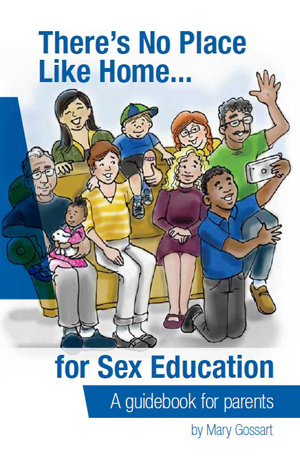
As a parent, I seek assurance. I want my struggles to be validated. I want to be inspired to think about my relationship with my children in new ways.
Too often, when desperately searching the internet for advice on sticky parenting situations, I find tidy lists or prescriptions of what I must do to get this raising-kids thing right. I bristle when I browse the parenting shelf at the library because I find books by strident experts, who don’t know me and my family, simplify parenting into cliches. I rarely find a parenting book I can recommend.
Mary Gossart’s There’s No Place Like Home...for Sex Education is different. She encourages parents to have confidence in their instincts while also providing practical suggestions about how to handle conversations about sexuality at every developmental stage--from preschoolers to teenagers. This is the book I will call upon when addressing issues of sexuality with my four, six, fifteen, or eighteen-year-old children.
In it, Gossart writes, “There’s no one answer that fits all. Trust that you have some good intuition about these sorts of issues. Take your cues from your own gut and from your child’s reaction.” Amen to that. Gossart provides guidance without making assumptions about a my values or suggesting there is one way to educate your children about sexuality.
When I was in middle school, my mom attempted sex education. A permission slip from my middle school health class was sent home that asked if I her daughter was...
1. Not allowed to participate in sex education,
2. Allowed to participate in sex education, OR
3. Allowed to participate in sex education AND please send all materials home to be reviewed together.
My mom picked #3. When we read aloud the school’s curriculum, giggling when she accidentally read “pubic hair” as “public hair,” I learned that I could talk about sexuality with my mother. She was available and open to the conversation. Of course, she had to be open to many conversations about many things before for me to trust her.
In the first few pages of the book, Gossart introduces the idea of being an “askable” adult, an adult who is an approachable, available, caring resource. I want to parent as my mother did. I want to be an “askable” parent. Throughout the book Gossart emphasizes a parent’s relationship with their children is the foundation on which to have open and honest conversations about sexuality (and everything else). Her ideas about how to build this type of relationship, unlike the lists I mocked above, resonated with me.
For instance, Gossart reminded me that independent, informed decision-making in early elementary school sets the foundation for later confident decision-making. My relationship with my children facilitates self-assured choices as they develop and grow up. I want to be mindful of this as I help my six-year-old navigate playground conflicts.
Later, Gossart outlines how parents of middle schoolers need to recognize the range of sexual issues their children are curious about, listen more than talk, respect their children’s views, provide factual information, and trust their children’s decision-making. That’s radical and powerful stuff to consider in the relationship between a parent and a seventh grader.
Finally, for parents of high school students, Gossart emphasizes, in the context of our relationship with our children, the importance of being a healthy role model, staying connected to your child, and allowing adolescence to be a process, not a race. She also points out that high schoolers have two tasks: to establish independence and define their values. Important reminders for the controlling, helicopter parent in all of us.
I am a big fan of Robie Harris’s picture books It’s Perfectly Normal and It’s So Amazing for education about sexuality because they are written and illustrated in a way that allows for children to circle back to them again and again. Gossart’s book is similar. She stresses that parents must return to the topic of sexuality with their children and her book is structured to do that. Each of the five sections of this book covers a range of topics parents might expect to face during a specific time of their child’s life. I will use this guidebook as I travel through all of these stages.
Years ago, when a parent called me to ask about why my four-year-old and her friend had “decorated their vaginas with chalk” while playing together at our house, this book would have been a help. The section “Show me yours and I’ll show you mine” would have prepared me for this natural exploration and also given me a tangible way to respond my child. The section “But Scott’s dad said…” would also help me to figure out how to talk to my child about the other family’s values and healthy boundaries.
When dozens of pornographic images invaded my laptop as my eleven-year-old was using it for homework, and googling “how to discuss porn” didn’t prove too helpful, this book would have showed me how to initiate the conversation, how my panicked reaction might affect my child, and pushed me to ask myself about the many ways my child might think about porn.
I wish I’d read the section of the book on sexting before hammering my children with my perspective, based in fear and discomfort, instead of providing a reasonable perspective, based in accurate information and trust.
The one area of book that I wish was expanded is the discussion of consent. My oldest teenager has told me they wished I shared more about what a healthy consenting relationship looks like. Gossart acknowledges that it’s easy to focus on the dangers of sex and reminds parents to also talk about the joys and pleasures of sex. But, while she spend several pages talking about how to prepare teenagers to say no in the middle of a pressured sexual situation and even gives ways to rehearse these scenarios, there is little specificity in the pages about intimacy and pleasure. I would love for Gossart to script what affirmative consent looks like. She mentions that a "clear yes" is essential, but my children and I need more specifics in understanding what that looks like.
I love that Gossart covers more than just the mechanics of sex and refrains from any scare tactics. She is direct and fair. I recommend this book to any parents of children at all ages. It is one I will turn back to again and again.
Monday, April 24, 2017
Obsessions with Disney and Stuff Like It: Negotiating Life with Children and Television

“Mom, aloha means hello and goodbye. And ohana means family, like we’re all connected.” My five-and-a-half-year-old daughter just finished watching Disney's Lilo and Stitch and bragged, "I know a lot about Hawaii."
She was correct in her triumphant translations of aloha and ohana, but I insist she cannot know "a lot" about Hawaii from a Disney movie. Hawaii is more than aliens and hula and people who don't always wear shoes. She ought to know about the Kapu System, Captain Cook and King Kamehameha, and how colonization kills people and culture. I will sit her down and walk her through this another day, another age.
For a decade and a half I asked myself these questions: are 85 minutes of quiet and wonder worth the confusion a Disney movie offers? Is Disney the evil empire implanting our children with sexist and racist stereotypes that will take years of anti-racist training and a library of feminist books to undo? Should I forbid all things Magic Kingdom? Or will that make Disney the forbidden fruit, thus, more appealing?
I've answered this question differently on different days and I arriving at an answer that is as clear and flexible as the constitution. I came to this conclusion after a struggle.
I have two sets of children. The Bigs, ages seventeen and fourteen, and the Littles, ages three and nearly six. The two batches of kids are growing up with a decade between them. When the Bigs were born, we didn't own cellphones. When the Littles were born, I latched onto my smartphone for every feeding of the nearly two years I nursed both of them.
Parenting is fraught with figuring and reasoning and a fair amount of outright obsessing. I try to stick with the former and talk myself off the ledge when the latter takes hold.
When I was pregnant with my firstborn, I implored my husband to consider our embryo’s future media consumption. Once our baby was on the outside, we’d avoid Disney just as during gestation we avoided alcohol, grocery store birthday cake, and Taco Bell. I explained if we didn’t take precautions, our children would be confused about America's indigenous people. Watching the seemingly benign Peter Pan could lead to disaster. None of our friends were American Indians, so we'd have to provide them with an accurate and complete picture some other way until they could read Sherman Alexie to themselves.
Deep down I am a contrarian. If I am drawn into a conversation about school vacations, I declare a preference of nature over theme parks and unscheduled days over endless camps. If I detect a tone of superiority when I hear an overprotective parent brag about their two hours of screen time a week, I proudly confess we sometimes watch three hours a day. I pretend to be nonchalant, settled. It is my duty to be the devil's advocate.
As new parents at the close of the 1990s, a time before cellphones or Hulu or even a DSL connection at home, Philip and I sought advice from experts in books. We did the purest things we could manage. Good students, we wanted to get an A in parenting. Nearly no refined sugar for any of us and, partly to keep Mickey in his place, no television in the house. We were forced to read and play gin and have friends over for dinner.
Eventually some friends loaned us their spare TV and we bought a VCR. For movies only, we pledged. This was the thin edge of the wedge. Still, watching took effort. It required walk to the store to rent a tape. Soon enough we attached bunny ears to the TV and discovered CSI and Survivor. Still, television was confined to the living room and the hours of the evening when our baby was asleep. He remained untainted by any images on a screen, let alone Disney.
For his second birthday, one of our meddling friends bought our son a video, Winnie the Pooh Sing-a-long. It seemed harmless enough, an imaginary world created in a book in the 1920s. It was a literary classic and the 23-minute video provided us an endless amount of time to get stuff done, like the dishes. Our son said "Pooh-one-more-time" so many times that it became our password for frequent flyer accounts. Thus, Disney wormed its way into our tiny, happy family.
On vacation, two-and-half-year old Sumner watched The Lion King with his godfather. I thought: too scary, too much patriarchy, and too much Nazi imagery. And why is everything about Africa for kids only about animals? Maybe I was overreacting. Perhaps it is it just a movie about lions and sibling jealousy leading to murder? Who can argue with the artistic value of a villain voiced by Alan Rickman? His godfather is Jewish, so maybe I could trust his judgement.
Soon after, my aunt showed him Cinderella on a playdate with his cousin. I figured having a stay-at-home dad and a mom who wore clogs would mitigate the messages woman must clean, marry a man, and have small feet to fit in tiny shoes. It was a magical world with talking animals in important roles, so how much would he extrapolate from the movie to his real world?
Before his third birthday, my mom sat him in front of the parent-approved Winnie the Pooh and the Blustery Day. Later, she found him cowering behind my father's empty recliner, afraid of the Heffalumps and Woozles. She felt like she'd just forced him to watch Scarface and vowed not to frighten him again. I reasoned he would not suffer any long-term damage as facing fear was a good thing.
I played it cool at the Tot Lot, casting my vote with the laid back moms in favor of some TV instead of cheering on the Waldorf-leaning parents' blackouts. But in private, when life with a small child felt out of my control, I looked for a culprit. Were our son’s early morning wake-ups due to a frightening reel of the final scene of The Little Mermaid running in his head? A life of sleep deprivation would be miserable. Sometimes he whined about being bored. Would Disney make his brain lazy so the complexities of Narnia and Middle Earth wouldn't appeal? When he entered preschool, would he force little girls into sparkly dresses and try to save them?
In reality, he seemed pretty well-adjusted, despite his firm footing in the wonderful world of Disney. He was comfortable wearing pink and yellow, he treated little girls just like little boys, and continued to have a flexible imagination. He was a lateral three-year-old thinker: cooking things in his play kitchen for his trains and assigning everyone he knew a Winnie-the-Pooh character or dinosaur species he expected them to personify.
By the time my son was four-and-a-half and his new sister was one-and-a-half, television became less about feeding my over zealous ruminations and more a matter of survival. My husband was a second year medical student and I was in grad school. While the new baby napped, I plugged my son in so I could get some homework done. With no godparents, aunts, or grandmas to encroach on my ideals or help out, I carefully controlled what he watched: "Thomas the Tank Engine" tapes and PBS shows. I drew a new line for aggressive sheltering: no cable. We made a Disney allowance for Mary Poppins, which we picked up for a quarter at the garage sale. I often found him clinging to the ottoman and stepping-in-time with the chimney sweeps. It was kind of magical.
There were high points in Disney's filmology. Features like Wall-E and Enchanted turned Disney conventions on their head. Wall-E's environmental allegory captivated my kids' imaginations and led to many conversations about technology and waste and the mechanized shopping carts at Sam's Club. Enchanted parodied the Disney princesses' dogged sweetness while showing kindness and optimism might prevail in a battle of good and evil. I began to relax. A bit.
When grad school ended and we moved to a house, a cable line lay next our 24 inch television hidden in the second floor playroom. The lifeline was so tempting. Within weeks, we plugged it in and became bootleggers of basic cable.
Previously Nickelodeon, the Disney Channel, and Cartoon Network, luxuries left to hotel rooms and grandparents' dens, were pumped right into a room designed for play. Television was limited to an hour and Disney Channel was strictly forbidden, primarily based on my artistic objections. Hannah Montana was not funny and Zoey 101 was beyond stupid. I wouldn't raise children who liked bad comedy.
Fortunately the only thing my son at eight and my daughter at five could agree on was Sponge Bob Square Pants, a creative home run. I barely needed to intervene. We all began to say "imagination" airily like Sponge Bob and Patrick, miming a rainbow over our heads. When the family was glum, I put on my best Sandy voice, "Howdy. Holy Guacamole, Sponge Bob." My angst receded. Cartoons could be edifying. There were bigger fish to fry: keeping up with a 60-hours-a-week job, staying sane during my husband's grueling overnight shifts and sleep-deprived hangovers, and keeping us fed.
Soon enough we had a big screen television (for football games) and paid for cable (for football games). And then like most Americans, we stopped watching television. Or so we told ourselves.
We got serious about streaming. It began by catching up on a few of my favorite shows on Hulu and evolved when our Blockbuster Rental store closed. It felt less like watching television because it is so much more private. No longer did I fulfill my craving for an easy narrative by watching TNT reruns of Law and Order in the middle of the house on a shared T.V. where my husband could judge me and my children might emulate me. Now I could privately dial up the episodes I hadn't seen on my laptop, the place where I worked. I could grade papers and quietly let something play in the background. I watched more television, but it was better television, I told myself.
I lost myself in season after season of quality programming. I loved Don Draper for the vulnerabilities he let soar every so often and watch one episode after another just to see those moments revealed. One Christmas break I assembled my wedding photo album, ten years after the wedding, while watching Bill Hendrickson navigate polygamous life in a way that reflected moments of my own marriage--money was often short and blending individual agendas was tough. I dialed up an episode of Bones when I needed to fold laundry or purge old toys.
The choices I relished with streaming, scared me when it came to my elementary school children. It seemed impossible to set limits for myself let alone them. We made arbitrary rules: no PG-13 until you are 13, door open if you have an electric device in your bedroom, no screens before 8:00 am on the weekends, no "Glee" (Disney for teens) ever, and no television on school nights.
When my son sometimes struggled with books assigned in middle and high school, I knew it was Disney's fault. I hypothesized he hated reading Shabanu because he was expecting Aladdin's Jasmine. He couldn't get through a book about life in Trujillo's Dominican Republic because he had no experience with life's harsh truths. He said it was about slow plots and being forced to do anything. I was convinced he would never be a feminist if he didn't eagerly read books about strong women.
Soon enough, the Bigs were sixteen and thirteen. They wielded smartphones I armed them with and watched whatever, whenever. I hate when they retreat into their caves and lay in bed stuck in the blue light of Youtube or Netflix and their ever present invitation to watch the next video.
This new world order, has some benefits. While we don't rent DVDs on Friday nights, order pizza, and watch movies together, we do show-sharing. This is when one of us watches a show and recommends it to the rest of us. Each of us watch the show at our own pace, checking in with the person a few episodes or seasons behind, delighting in all that is revealed. We've shared Veronica Mars, Parenthood, Lost, Game of Thrones, Arrested Development. Game of Thrones is inventing new story conventions, Veronica kicks so much ass, and everyone loves that I cry when the Parenthood's Bravermans yell at one another. We share the narrative.
In a world that overwhelms--social media, video games reward you for connecting jewels or candies--excellent television, even pretty good stuff, is a refuge, a shared story.
In this new landscape of television consumption, over a decade after we became parents, we pressed the reset button and had two more children. Disney is back in play. We are a million miles away from Pooh-one-more-time.
And, once again, television is survival. Everyday, at least once a day, I must freeze my small children in front of a screen so for a few moments I can catch my breath and hold back the avalanche of housework threatening to suffocate us. Streaming changes how small children watch. These platforms are smart, attuned to my littlest daughters preferences for fairies over squeaky monkeys and magical ponies over shows teaching them to read. These girls have a menu and my three-year-old tries to touch the TV like an iPad, dialing up her own destiny. I try to guide them to certain options (not too scary, not too fluffy, no repetitive sounds or songs) and still allow them choice.
Disney's marketing has shifted with this new way of watching. At our Walgreens, princesses are packaged together, a kind and controlled feminine force, capable of looking flawless, getting what they want, and smiling most of the time. Elsa and Anna are painted on a tiny lunchbox next to Cinderella, Aurora, Tatiana, and Mulan. My girls watch these films, some made in the 1950s and 1960s and some made this decade, as if they are a series, a epic of international royal cousins. The racism in the new packaging too. White princesses in front, princesses of color in the back or to the side. Mulan and Pocahontas can be streamed for free, but you have to pay to see the white princesses movies. I see where value is placed.
My dad showed the girls Peter Pan recently. One of my crunchy friends heard of this and was worried for their little minds. She wanted to know how I'd talk to them about how Tigerlily and her savage tribe were portrayed. I had forgotten about this part of the film. Am I losing my edge or maybe suffering from years of overcaffeination and sleep deprivation? I hope to chalk it up to perspective.
I do not say: you are watching racism. But I do say: I wouldn’t marry someone who was as mean and cruel as the Beast. It is so cool Pocahontas likes nature like you, but colonization didn’t happen like this. At all. And finally, why does Wendy have to take care of everyone?
Zola asks some questions too. She wonders why boys' Pull-ups have superheroes and girls' Pull-ups have pink princesses. She still wants straight hair, but thinks high heels are impractical and uncomfortable.
So, here's what I've settle on for now. We watch Disney. When Zola bragged about her solid knowledge of Hawaiian culture, I blurted out, maybe too intensely, "You can't trust Disney."
And there it was. My response was knee-jerk, immediate. No musing. I had my answer. After a decade and a half of overthinking it, I had arrived at a strategy to the problem: what to do about Disney?
You can watch it, just don't trust it.
Monday, April 17, 2017
How to Fix Your Teenager: Simple Solutions To Put This Embarrassing Period, Which You Can Only Hint About to Others Right Now, Behind You Forever and Commence Bragging About Your Cool and Successful Young Adult Who Lives in Another State
The following advice is fictional and does not depict any actual person or event or member of my family.
First, cultivate a close relationship with your child over the course of their lifetime. This may include, but is not limited to: breastfeeding until age three, sending your child to morning preschool (not ten-hour days at childcare), packing homemade lunches (not a bunch of packaged stuff thrown in a sack and certainly not hot lunch), listening to long monologues about video games you will never play, solving problems with bullies by giving assertiveness lessons, and generally making yourself available for every scrape, injury, insult, or break-up.
Second, engage your child in a variety of activities. While it may seem obvious, many parents do not realize well-adjusted children are overloaded, overachieving children. Start year-round sports by age four and continue, at least on an intramural level, through college. Humans need endorphins produced by extreme physical fitness. Stock an orderly art station near your kitchen to stimulate creativity and allow expression of emotion in quiet ways. Require your child to begin each day with meditation and goal setting. Make second-language learning part of every dinner. Travel to awe-inspiring locations on breaks from school and team practices. Please note: If your child gets overwhelmed or anxious keeping this pace, medicate. Once you figure out what drug he needs based on your webmd research, see your doctor for a quick prescription.
Third, set boundaries and limits. Make sure your child never has too much or sees you have too much. Of anything, ever. This includes, but is not limited to, food, alcohol, mind-altering drugs, material possessions, exercise, dieting, volunteering, sleeping, cleaning, religion, and Tylenol. This perfect modeling will show your child too much of a good thing is a bad thing. As adolescence blossoms, make explicit the boundaries and limits you have always practiced. If your child crosses a line, make the boundaries and limits clear again. Then ground your child. Then kick your child out, so as they are floundering, lost and out of control, they will feel more alone and vulnerable. This usually fixes things.
Fourth, keep open lines of communication. Begin in the tween years with half-honest and carefully-contrived stories from your youth, illustrating how easy it is to make bad choices and how bad choices lead to disaster unless you (and your rescuing parents) catch you. This works best if one parent has contrasting stories of an drug-and-alcohol-free youth that was also angst free. Tidy narratives win. Ask your child to tell you about their days at school and nights on the town. Do not ask them to evaluate these experiences, just recount. Do not immediately pass judgement on their immature and ill-advised choices to smoke pot before a shift at Seven Eleven, drink until they pass out, or try mushrooms procured from an unfamiliar dealer. Instead, listen and let the truth roll out in waves. Be thankful for the honesty and do your research. Then bribe your child to have lunch with you at an expensive burger place and tell them how stupid they are as they sip a $ 6.00 milkshake from a very wide straw.
Fifth, remember it takes a village to keep children under surveillance raise children. This is especially true if you live in a community where anyone ever judges anyone else. Call the parents of the children your child played with in elementary school. Feel them out, see if they are entirely-too-permissive or ridiculously-rule-bound. Either way, do not reveal the real truth of your parenting strategy, because you are flying by the seat of your pants. Also, tell them a few impressive things about your child, honorable mention at the Easter Regional Soccer Tournament and the A received on the poem “Green Grass Grows,” written in freshman English. Do not reveal your suspicion that your child tried a friend’s Ritalin last weekend. Finally, ask them to look out for your child, as you will be looking out for their child. End the call by asking for the phone numbers of the parents of the teenagers your child now actually hangs out with.
A Note on Your Personal Failures
If you are unable to follow all of these steps, remember the phrase “is not limited to” in number 1 and 3. Brainstorm the items left off the list, which you must have missed. It is too late to do anything about these, but you may want to keep your expanded list next to your bed so when you lay awake at night worrying, you can pull out the list and turn your anxieties to your past failures instead of your child’s future downfall.
Wednesday, March 08, 2017
What the Beard Reveals

A few days before Halloween, my solemn yoga teacher began class with some thoughts on identity. He encouraged us to be mindful of the masks we “put on” for trick or treating. He warned: our costumes might hide our true selves. He said we must also be careful not to lose our sense of self in a persona we “put on” each day. He admitted even yogis don a identity, actors performing enlightenment. The Halloween costume was his symbol of our pretending.
Poised with my hands flat on my knees, I smiled at the teacher. Inwardly my knee jerk reaction was: that’s not it. He’s got this wrong. In a costume, I feel the most me I can be. In a costume, I am comfortable, complete.
While I cycled through some cat-cows, I worried: maybe he is right? Are costumes some strange extension of our secret self-hate? Does the cheerleading costume hide my critical nature so I feel positive? Does the wig conceal my gray hair so I act younger? Does the eyeliner open my eyes so I can fake being more awake, present?
For the last four months, in the steady build up of indulgences (Halloween, Thanksgiving, Christmas, New Year’s, Twelfth Night, and then the endless balls, parties, and parades of Carnival) to Mardi Gras Day, I have been considering costumes and masks.
On any given day, I hate thinking about clothes and hair and eye shadow. While I might be uncomfortable in clothes that don’t flatter me or worse, just don’t fit, I hate spending time on the daily procedure of readying for the day. I also hate shopping and taking time to set myself up with a comfortable and appropriate wardrobe.
I used to be a “wash and go girl.” As I mother, I guess I am just a “go woman,” meaning showers are no longer a daily routine. Most of the men in my life, from my brother to my college roommate to my husband, generally take significantly more time to get ready for the day than me.
While my mom used to pester me to brush my hair and take my chipped toenail polish off, she’d also say, “I get it. You have more important things to worry about.” Still, when I was staying with her a few years ago and slept in eyeliner and mascara, she brought me make-up remover and cotton balls in the morning.
In high school, I baffled at put-together girls wearing cotton leggings and matching flats. Often, even their bracelets and earrings coordinated with their outfits. I don’t believe in changing jewelry on a daily basis and too-much matching is somehow oppressive to me. How did they do it?
In college we were all supposed to wear baggy jeans at our hips and as a teacher it was colored khakis and t-shirts from the fancy end of the Loft spectrum. At every life stage, I opted for comfortable shoes. I admit, I wear heels and a sheath dress whenever I present at a conference and I clean up well and slip on a LBD when a evening event requires it. But, as a rule, I am more Eleanor Roosevelt than Michelle Obama. Practical and sensible.
Now, as a stay- at-home mom, I wear yoga pants nearly everyday in hopes that I may fit in a workout. What a cliche. When I put on a frumpy jean skirt a few weeks ago, my six-year-old told me, “You look fancy. It’s funny when you don’t wear leggings.” I never really liked that skirt anyway.
The reason I do not relish, in fact I inwardly groan, at the readying process each day, is it is fraught with so many expectations. Be cute. Look together. Be professional. Look feminine, but not too soft. Be approachable. Look laid back. Be in control. Look like an expert. Be fit. Hide your tummy. Smooth your flyaways. Moisturize your face, hands, and lips, but don’t be greasy or oily. Hold the camera above your head to hide your chin.
I'm already drowning in expectations. Some are self-imposed, some are placed on me by others. Be an ever-present mother and wife, available. Keep a cleaner house or at least one where the laundry gets folded and put away. Cook healthy things from scratch. Be a smashing success in a professional capacity. Take care of yourself--exercise, be social, take quiet time, and go on dates with your husband. Do everything right.
I spend each day convincing myself to live by more a reasonable code. I am human and I need to accept the human condition. Perfection is impossible. I fight the shoulds from dawn to dusk. I’ve convinced myself it’s pretty alright that today I “dressed up” in jeans and slipped on a bracelet. Still, I’m working on letting go of the fact it took me a week to revise and edit this post and am fighting an urge to squander this writing time clearing off the dining room table.
Costuming gives me a break, true freedom from the dance of constantly readjusting expectations and accepting what is. Costuming is my unmasking.
In costumes, especially Mardi Gras costumes, there are few rules. For the first event of the season, I wore my pink wig and favorite green shawl and then entered a silly contest where I pretended to be a nutria and chewed my way through a cabbage to find a surprise. Last week my husband and I dressed in matching cheerleading costumes. On Fat Tuesday I wore a beard and he wore a dress. And several glorious days and nights he danced in powdered blue shorts for the masses while I provided security at the curb. For one night, I even had purple Barbie-doll hair and though it was tangled, I didn’t brush it.
Costumes cultivate real moments when I can shed codes, customs, and habits that dominate my psyche and just be me. Costumes silence my inner critic, weaken him and strengthen the person I am called to be.
Subscribe to:
Posts (Atom)